The Natural Talent Myth Leaves Out the Work
The natural talent myth hides the choices and opportunities behind creative skill. Learn to praise specific work without turning ability into a fixed label.
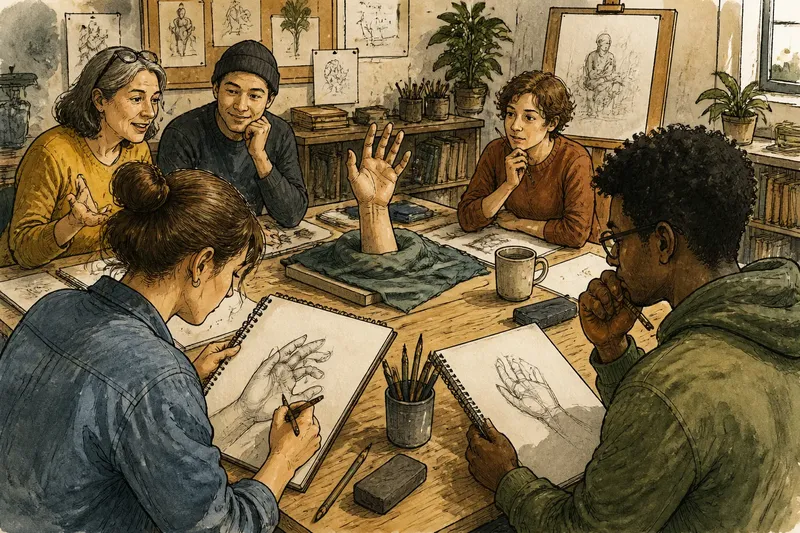
At a community drawing table, one person sketches a convincing hand while another pauses over the same subject. “You’re a natural,” someone says. The natural talent myth turns that first result into an explanation, though it cannot tell us what shaped it or what might help the other learner.
Talent labels can sound like praise, but they often blur differences in skill, practice and access. These five shifts keep the focus on people’s work and the conditions that let them develop.
1. Treat talent as a label, not an explanation
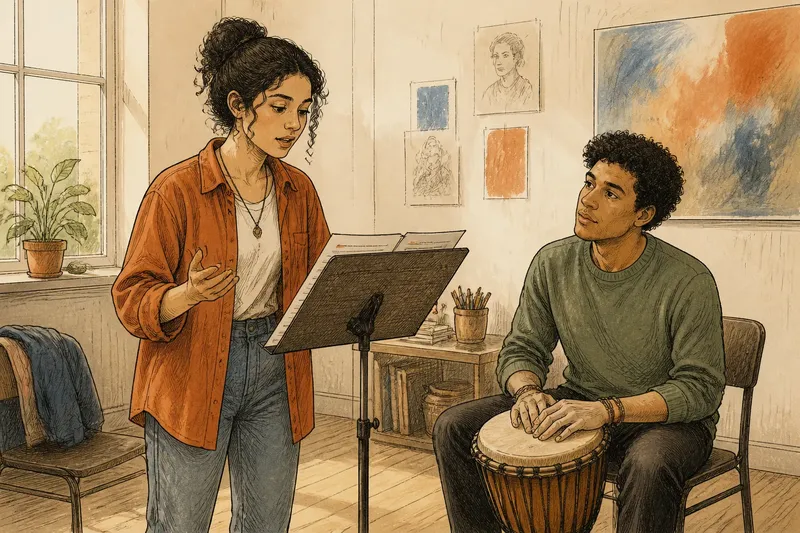
Calling someone talented can express admiration, but it does not identify a skill. A musician might hear, “You’re gifted,” after playing a tune cleanly. The comment leaves unanswered whether they kept time, shaped the melody, remembered a passage or recovered after a slip.
Those distinctions matter because each points to a different capability. “Your rhythm stayed steady through the change” describes something listeners can hear. The player can decide whether that is a quality they want to develop further.
Labels can also make ability sound fixed: some people have it, while others do not. A learner who struggles with a first attempt may take that as a reason to stop. Naming a skill keeps the person’s potential open without pretending that everyone starts from the same place.
2. Separate visible ease from the story behind it
A polished performance does not reveal its full history. A dancer may look relaxed because they know where their balance shifts, have prepared for a missed cue or feel comfortable in front of an audience. The ease is visible; its causes are not.
Rather than guessing how much effort went into a result, describe what you can hear or see: “You landed the turn with your weight centred,” or “The phrase became clearer when you slowed the ending.” This recognises a quality without inventing a story about how it came about.
Point to a moment the learner can locate: a brushstroke, a chord change or a line of dialogue. Specific praise makes the quality visible instead of mysterious.
3. Include access and opportunity in the story
People encounter a craft under different conditions. One writer may have a quiet place to work and books close at hand; another may fit writing around care duties and borrow a device. A confident first performance might reflect previous lessons, suitable equipment or a welcoming audience, as well as the performer’s own choices.
This context does not make anyone’s achievement less real. It helps explain why a learner who looks confident is not necessarily more committed or capable than someone who has had fewer chances to practise. A group that calls one member a natural can overlook who had access to materials, guidance or an invitation to take part.
When the circumstances are unclear, do not fill the gap with assumptions about character. Ask what would make participation possible, and make available opportunities explicit rather than expecting everyone to find them.
4. Describe creative choices without assigning identities
Feedback can distinguish a feature of the work from a judgement about its maker. “You are a natural storyteller” assigns an identity. “The pause before the last line gave the ending room to land” names a choice and its effect, leaving the learner free to decide whether it served their intention.
Imagine a learner reads an invented scene at the same pace throughout, and the final line sounds much like the rest. You could say, “The words are clear, but the tension stays at one level. Try holding a pause before the last line and listen for whether it stands apart.” The starting point is even delivery; the action is a held pause; the expected observable result is whether the ending sounds more distinct. The learner can keep, adapt or reject the choice without it becoming a judgement of their talent.
That distinction matters because creative choices belong to a piece of work; labels can follow someone into every new attempt.
5. Make the fifth shift about sharing opportunity
A person praised as the group’s “natural illustrator” may feel pressure to produce impressive work each time. Meanwhile, other members may hold back from asking for help, as if drawing well requires a gift they do not possess. This changes not only how the praised person sees their work, but also who feels entitled to take part.
Share access to materials, demonstrations and chances to show unfinished work. If one learner gets detailed guidance while others receive only broad praise, adjust the conversation so everyone can ask questions and hear specific responses. The aim is not identical outcomes; it is to avoid treating early confidence as proof of who belongs.
Before using a trait word, ask whether it gives the learner a useful way to understand their work or closes off other people’s participation. If a learner uses a label for themself, listen respectfully without making it the whole explanation.
What should feedback say instead of “natural talent”?
How can I praise a beginner without using a fixed label?
Name a specific quality in the work and what it helped you notice. For example, describe how a clear opening made a short piece easier to follow.
Does effort matter more than ability?
Neither word explains a person’s whole development. Consider the present work, the conditions around it and the choices the learner might want to make next.
What if someone calls me talented?
You can accept the kindness and add a detail: “Thank you; I’ve been working on the timing in that section.” This keeps the exchange warm while making the particular skill visible.
How can a teacher avoid favouring the “naturals”?
Give everyone clear opportunities to try, access to suitable materials and room to ask for guidance. Respond to the work in front of you rather than assuming that early confidence predicts who will develop.
The natural talent myth becomes less persuasive when people can see the skills, conditions and opportunities behind a result. In your next conversation, name one specific quality and make room for the learner’s own account of how they got there.