A First Showcase with Room to Listen
Plan a first showcase with a clear purpose, a comfortable audience and one useful question, so responses can help shape the next version of your work.

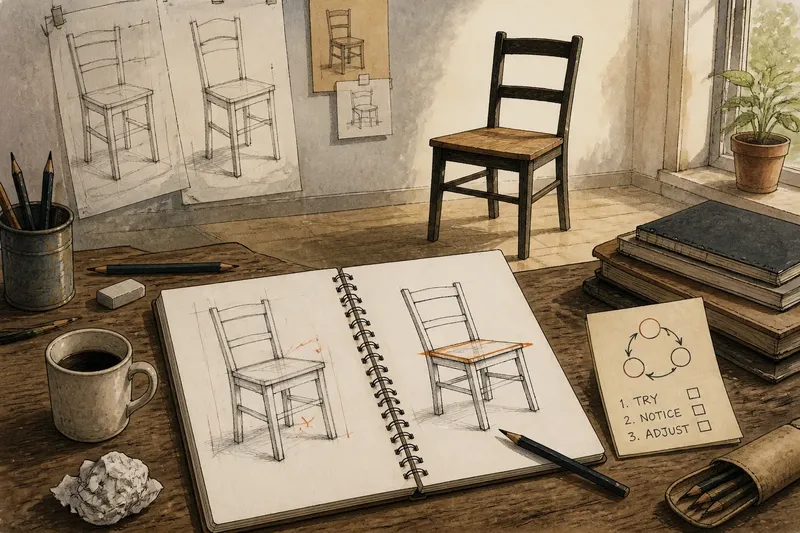
You have a sketchbook open on the kitchen table, a short piece of music ready on your phone, or a draft scene saved on your laptop. You want to share it, but a public launch feels too large and a vague “What do you think?” may leave you with little to use. A first showcase works best when it is a small, deliberate occasion for seeing how a piece reaches someone else.
The aim is not to collect approval or to settle every decision. It is to create a setting in which a particular audience can encounter work in progress, then respond to one question that helps you choose what to do next.
Choose the purpose before choosing the room
A showcase can serve different purposes, and those purposes call for different arrangements. You might want to find out whether the central idea is clear, whether a particular section holds attention, or whether the work makes sense to people who do not know its background. Naming one purpose helps prevent a small sharing from becoming an unfocused review.
Write the purpose as a sentence about what you need to understand. “I want to know whether the audience can follow the change in the character’s mood” is more useful than “I want feedback on my story”. The first points towards a particular moment and an audience response; the second invites comments on everything from punctuation to plot.
If the work is still fragile or unfinished, make the purpose exploratory: learn what people notice before you decide what to revise. If it is close to a version you may show more widely, make the purpose about reception: check whether the intended effect comes through. Neither purpose is superior; they simply require different expectations.
Match the audience to the question
Choose people who can offer the kind of response your purpose needs. A trusted friend may be a good listener for a personal poem, while a fellow maker may notice how a material choice affects a model. Someone outside your usual circle can tell you what is legible without explanation, but may not be able to comment on a specialist technique.
Think about the relationship as well as the expertise. A person who feels obliged to reassure you may avoid saying what confused them; a person who likes blunt critique may offer more intensity than you want at this stage. Tell invitees what kind of occasion it is and what sort of response would help. A small group can include different perspectives, but keep the exchange manageable enough that you can hear each person.
Say you have made a short illustrated story and want to know whether readers understand why the main character leaves home. You invite a couple of people who enjoy reading but have not heard you explain the plot, show them the pages in order, and ask what they understood about the departure. Their accounts can show whether the pages carry the motivation on their own, without turning the gathering into a vote on every drawing.
Set the scale that suits your situation
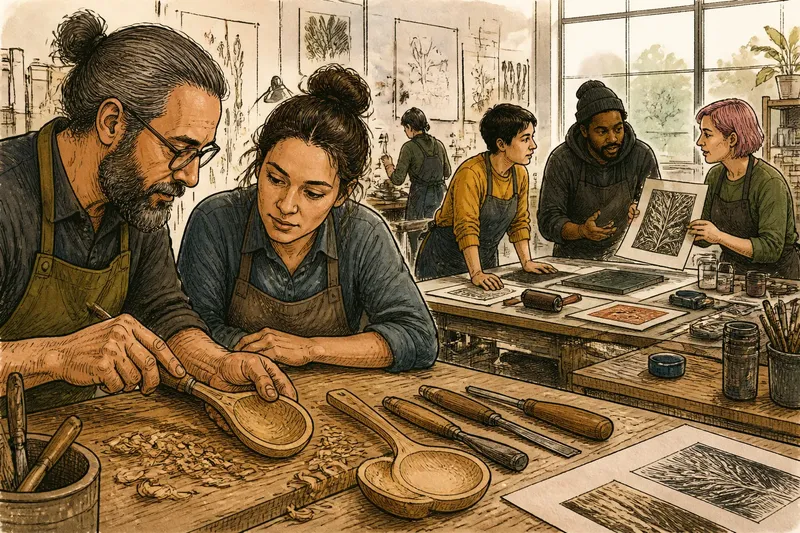
The right format depends on the work, the people and the kind of attention you need. A living-room reading, a quiet studio visit, a short online meeting or a display on a shared table can all work. Choose the least complicated setting that lets people experience the work in the intended way.
- If the work depends on sequence: share it from beginning to end, without interruption, then invite responses. This suits a song, a short film, a story or a dance phrase whose parts build on one another.
- If the work is visual or spatial: give people time to look before speaking. A print, sketch or small object may need a clear viewing position and enough light; resist explaining every choice before anyone has had a chance to notice it.
- If the work is participatory: explain what visitors may do and what they can simply observe. This is useful for an activity, an interactive prototype or a shared making session, where uncertainty about the invitation can distract from the work.
- If the work is personal: choose a private setting and a smaller audience. You can decide in advance what is open for discussion and what you are sharing without asking people to interpret.
Keep practical arrangements proportionate. Check that listeners can hear, viewers can see, and the work can be presented without a long technical preamble. If a device, venue or material has specific handling requirements, follow the relevant maker’s or venue’s instructions.
Ask one question that can guide a revision
A useful question points people towards an observable response rather than a verdict. “Which part stayed with you?” asks for a concrete memory; “Was it good?” asks for a judgement that may be hard to explain. Questions about a precise moment, choice or effect are easier to answer and more likely to lead to a considered next version.
Choose a question that fits what you are deciding. If you are unsure about clarity, ask what people think is happening at a particular point. If you are exploring mood, ask which moment changed the feeling for them. If you are shaping a presentation, ask what they noticed first. Avoid asking several questions at once: a focused prompt makes it easier to hear patterns without treating every comment as an instruction.
Before the sharing, tell the audience your purpose and the question you will ask afterwards. You do not need to explain the answer you hope to hear. That can lead people towards your interpretation instead of letting you learn how the work meets them.
Make the response easy to give and receive
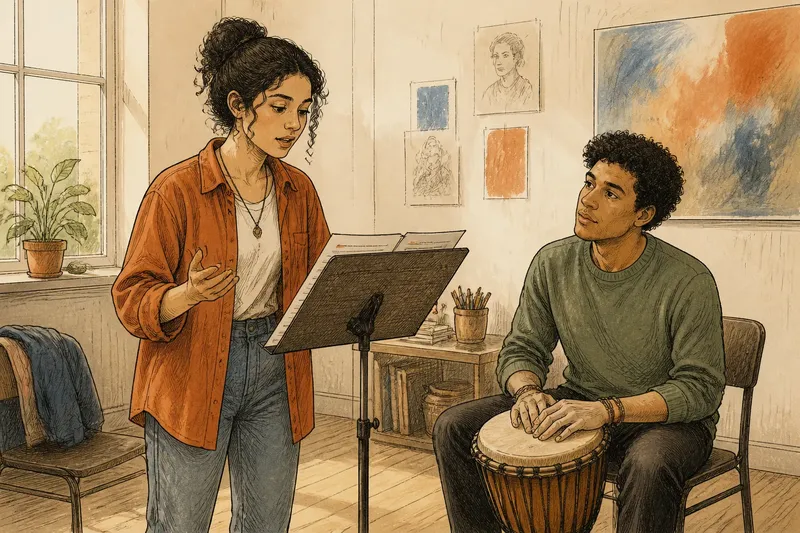
After the audience has encountered the work, leave a short pause before opening discussion. Give people a moment to form their own account, then invite them to answer the chosen question. If several people are present, let each speak before replies or debate begin; this helps one confident voice from setting the direction for everyone else.
Listen without defending a choice or promising to make a change. You can ask for clarification, such as “Which moment gave you that impression?”, but you do not have to explain the work until you have heard the response. Make a few notes afterwards, separating what people noticed from the changes you may choose to make.
Feedback is information, not a set of orders. One person’s response may reveal a personal preference; several people independently noticing the same point may give you a reason to examine it. You remain responsible for deciding which observations fit the work you want to make.
Which kind of first sharing fits your situation?
What if I am not ready for detailed criticism?
Invite one or two trusted listeners and ask what they noticed, rather than what they would change. This lets you learn how the work is received while keeping the occasion away from a full critique session.
What if I need to know whether the idea is clear?
Choose people who have not heard your explanation, and ask them to describe what they think is happening or being proposed. Their descriptions can show where the work communicates unaided and where it may need a clearer cue.
What if the work is unfinished?
Show a complete enough portion to support the question, and say plainly that it is a work in progress. Ask about the particular uncertainty you are exploring, so unfinished elements do not invite comments on decisions you have not reached.
What if my intended audience is hard to invite?
Start with people who share some relevant experience, while making clear that they are not a substitute for the intended audience. Ask them to respond to the feature you can assess together, and save claims about broader reception until you can hear from those future viewers or users.
Use what you heard to choose the next version
After everyone has left, read your notes and mark comments that answer the original question. Separate them from suggestions that open a different topic. Then choose a manageable next move: clarify a confusing transition, preserve a moment that readers recalled, or leave a section alone because it is already doing the job you intended.
If the responses conflict, look for the reason behind each one rather than counting votes. Different people may have approached the work with different expectations, or one may have noticed a feature another overlooked. You can decide to keep the work as it is, make a small adjustment, or arrange another sharing later with a different audience and a sharper question.
A first showcase does not need to settle what the work will become. Its value lies in making one decision more informed. For a first showcase, keep the purpose specific, the audience suited to it and the question useful enough to carry into the next version.